



Large homes mean more plumbing, and more plumbing means more places for something to go wrong at the worst possible moment. [Company] provides round-the-clock emergency plumbing with licensed plumbers who can handle everything from a failed well pump to a ruptured supply line in a second-floor bathroom.
Every emergency call starts with stopping the damage. From there, our plumbers find the cause, walk you through the repair options, and give you a firm price before work begins. Many repairs are finished on the first visit because our trucks carry the parts and diagnostic equipment needed for indoor plumbing as well as private water and wastewater systems.
The answer depends partly on how your property gets its water and handles wastewater. Many Pine Ridge homes rely on a private well and septic system rather than county lines, which adds emergencies that homes on public utilities never face. A loss of water pressure could mean a failed well pump, and a slow drain could mean a septic system at capacity rather than a simple clog.
Signs that call for an emergency plumber include:
If you are not sure whether the problem is inside the home or in the well or septic system, call us. Our plumbers diagnose both, so you do not have to guess which contractor to call first.
Pine Ridge is a neighborhood of two generations. Original ranch homes from the 1960s and 1970s still stand next to newly built estate homes, and each generation tends to break down in its own way.
In older homes, the most common emergencies trace back to materials at the end of their service life. Galvanized supply lines corrode from the inside until a joint gives way, cast iron drains crack and scale, and septic tanks and drain fields installed decades ago struggle to keep up with modern water use. A single heavy storm can be enough to push an aging system past its limit.
Newer homes avoid many of those problems but introduce others. Extra bathrooms, outdoor kitchens, pool equipment, multiple water heaters, recirculation pumps, and whole-house filtration or reverse osmosis systems all add connections that can fail. When a fitting lets go in an upstairs bath or a valve fails behind a finished wall, the damage can spread across several rooms quickly. Our plumbers work on both generations of plumbing every day and arrive ready for whichever one we find.
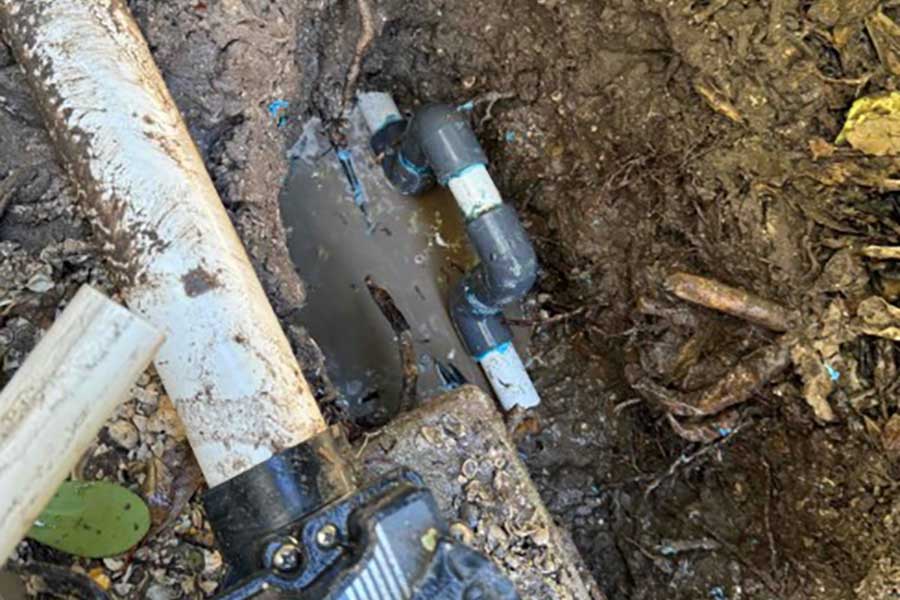
Our emergency services are organized around the three systems that keep a home running, so we can get to the root of the problem no matter where it starts.
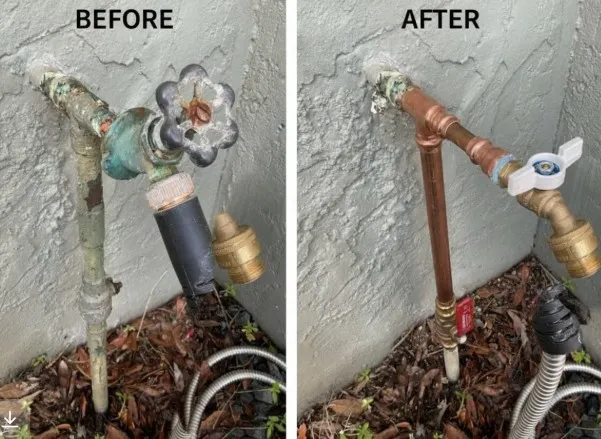
Inside the home, we repair burst and leaking pipes, replace failed valves and supply lines, restore toilets and fixtures, and repair or replace tank and tankless water heaters, often the same day. We also use acoustic and thermal leak detection to find hidden leaks in walls, ceilings, and slabs without unnecessary demolition.
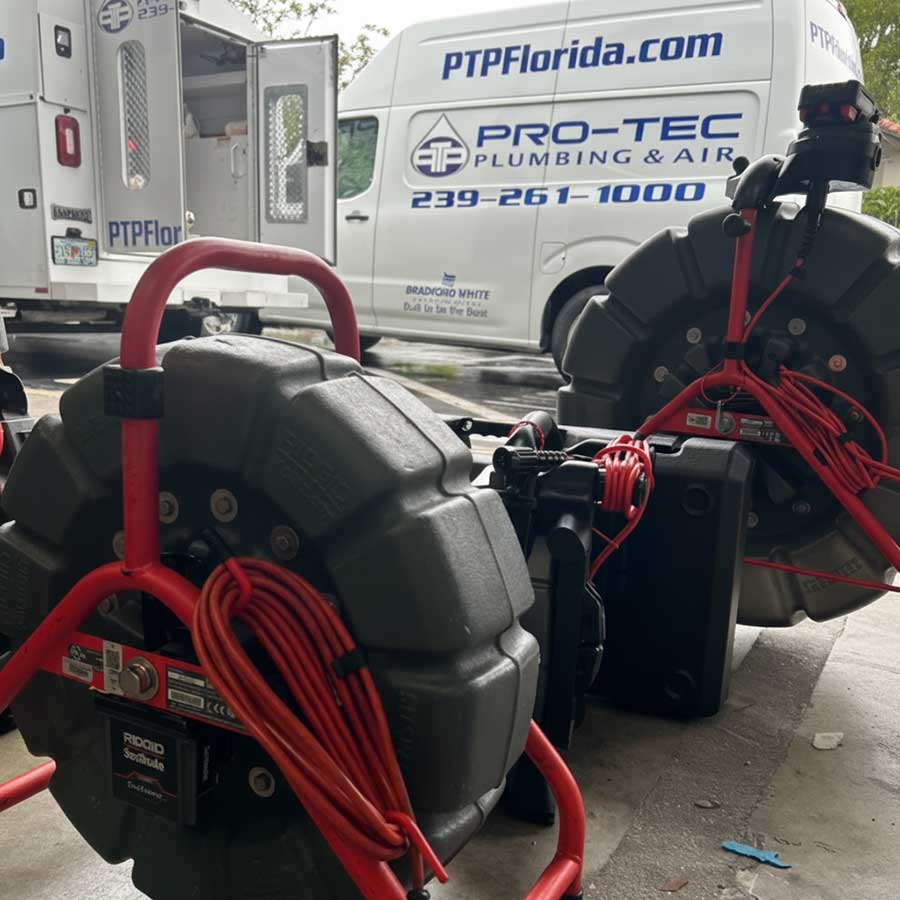
For the water supply, we troubleshoot well pumps, pressure tanks, pressure switches, and the lines between the well and the house, and we service the treatment equipment many homeowners depend on for well water. On the wastewater side, we clear main drain lines, inspect them with video cameras, and diagnose septic backups to determine whether the cause is a blocked line, a full tank, or a failing drain field, coordinating tank pumping when it is needed.
Every emergency visit ends with a test of the repaired system and a clear explanation of anything else that needs attention.
A septic system depends on soil that can absorb wastewater. During the summer rainy season, the water table in this part of Collier County can rise close to the surface, and the sandy soil beneath many Pine Ridge drain fields becomes saturated. With nowhere for effluent to go, wastewater backs up into the tank and eventually into the home, usually showing up first in a lower shower, tub, or toilet.
We see this most often on streets with a mix of original and rebuilt homes, including Ridge Drive, Cassena Road, Hickory Road, West Street, and Gordonia Road. Many older systems were sized for smaller houses, and a new home with more bedrooms and bathrooms can push an existing drain field past what it was designed to handle. Lots raised with fill during new construction can also change how water moves across neighboring properties and send more runoff toward existing drain fields. Roots from the area’s mature pines and landscaping add another point of failure by working their way into tanks and distribution lines.
When we respond to a septic backup, we first check whether the blockage is in the main line between the house and the tank, which we can clear on the spot. If the line is clear, we check the tank level, the inlet and outlet baffles, and the distribution box, then evaluate the drain field for saturation or failure. We arrange pumping when the tank is full and explain your options if the drain field needs repair or replacement. Until the ground dries out, we help you cut back water use and keep the home livable.
Choosing an emergency plumber usually happens in a hurry, so it helps to know what to ask. Here is how [Company] answers the questions that matter most:
Pine Ridge homeowners call us because we show up prepared, communicate clearly, and treat every home with the care it deserves.
No. Every gallon of water you send down the drain adds to the backup and can push sewage into the home. Stop using sinks, toilets, showers, and appliances that drain until a plumber has found the cause, and keep children and pets away from any area where wastewater has surfaced.
We use cookies to improve your experience on our site. By using our site, you consent to cookies.
Manage your cookie preferences below:
Essential cookies enable basic functions and are necessary for the proper function of the website.
You can find more information in our Cookie Policy and .